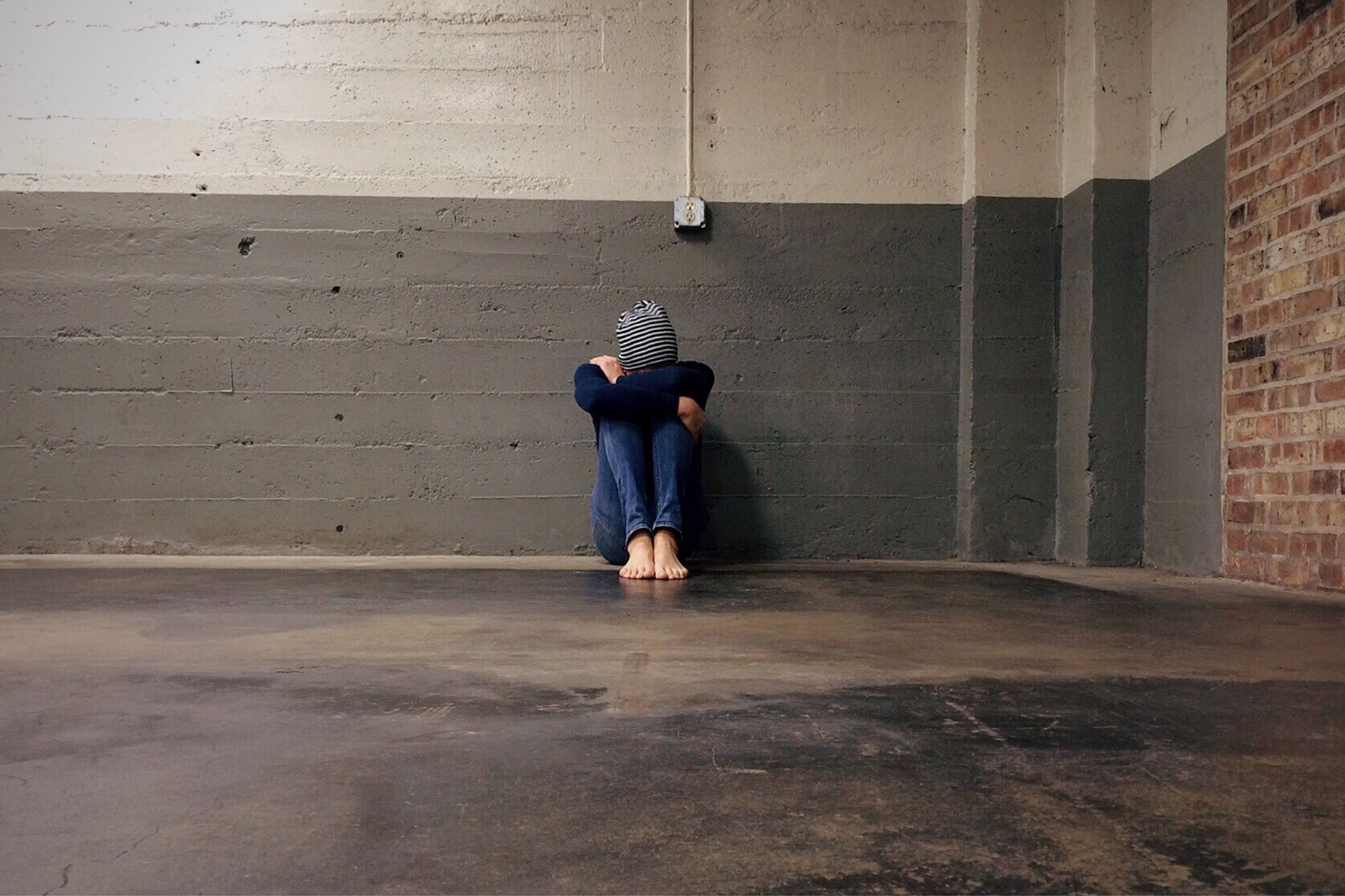
Sad and happy – a comment that went deep

I wrote somewhere it only takes two things to snap. Being tired and a person that triggers you for example, it does not matter what are the two.

Yesterday a family member that tends to trigger me said a comment that touched a fear I have not solved. I was also tired. That’s more than two.

The comment hit me, I lowered my look, that person may have felt or not I am not sure. I stopped listening to the conversation. The comment stayed with me, I felt it in my body. Thoughts were running fast.

I did not snap, I did not say anything. Any discussion at that point, even starting constructively, would lead to yelling.

The internal noise level decreased but stayed with me. The fear is also here, deep.

A day gone by. I feel their comment in my body. Heavy and sad. Happy I held back from making it worse.

Real time stress attach

Tension in my upper stomach. I tried to cross my arms on my chest, and then stopped when recalled stress is there and I cannot push it back inside.

Felt a need to cry a little. Crying is you accepting the pain and sadness. Accepting is releasing.

Mindful breathing, each breath asking myself my do I it, everything is bad in any case.

Still painful.

Continue breathing, it’s the only thing I can really control tight now. You better be in shit but in control of something, than just in shit.

Mindfully letting every negative thought to rise and go, the negativity thought rate is so high, it makes you tired.

I feel the stress in my forehead. My chest is a bit softer but still stressed.

Breathing is a bit easier now, chest and head are still stressed but less. Few more breaths and I’ll try take a walk outside.

Will it ever stop these cycles?

I’m better now.

Hard to move, hard to friction

Cannot move easily. Will probably never will. Don’t have this feature. Best thing will be to accept it.

Move as in – go out, meet people, camping, holiday, go out to buy something, fly abroad, move to live in a new city or country.

I can move in my head. I can move in the street when it’s super early before the sun comes up, I can read, I can sit without doing anything for a crazy amount of time.

I don’t want external accountability. Don’t make me. I know after moving I will feel better. I know going out is good for you. I know airing thoughts is also good for you. I know it’s not good to be too much in your own head. When you go out the nature makes you calm, puts things in perspective. Being in motion circulates your blood, moves your muscles. Looking at the sky is calming and beautiful. Being around people that are in good energy is good for you. Being around people that care for you is good. Just talking with a friend can make things better. Changing atmosphere makes you see things you stopped seeing.

Working at doing it makes me tired. I will move very little, at my own pace. You will not understand it, probably I will also not. It is just like that.

Up is just not down – 50/40/10

Returned to my all time melancholic playlist, Linkin Park acoustic live songs.

I spent countless hours with those songs. Soaking in the sensitivity and sadness, of the songs and mine. It’s been a long time since I dove into this playlist.

It so easy to go down.

50% of the time working on not going down.

40% being somewhat down or scared.

10% not down.

Not down is being not heavy. The chest is not hurting. You don’t want to run. You just Are. I’m just Am. That’s it.

50/40/10. That’s what I have.

Stubborn

Where’s the balance between thinking independently and simply being stubborn? Reality today feels so different from twenty years ago. I find many of the changes are making things worse—frankly, almost all of them. I keep asking myself: is this just my own inability to adapt, or are these truly harmful changes? Even the way young people speak sounds strange to me. And why don’t they breathe through their noses?

Goodbye to Fact-Based Reality Analysis – Part One

I don’t know if it ever existed and is now gone. It’s possible that the very reasons I attribute to its disappearance are actually just the messenger exposing the fact that it never existed at all.

​We humans change with age. Some become more certain of things, while others grow more aware of life’s complexities. Maybe all the following analysis is just me getting older. Maybe there’s more to it.

Paradoxically, the Information Age has made us blind to information. We have too much of it, and we are presented with information curated by algorithms—black boxes developed to maximize engagement and, perhaps, to create global chaos, although this last point is hard to prove.

Reality communicates with history, and human weaknesses do not change. The logical conclusion is to study the past. But if we know reality is portrayed by people and machines with agendas, who can guarantee our understanding of the past is accurate?

From a historical perspective, the most relevant human weaknesses are fear, greed, and ego. These are constant. The new addition that technology amplifies is the human tendency for addiction. In the past, one could abuse an addiction with alcohol, cards, food, etc. The impact of these was confined to one’s immediate environment. These days, with mobile devices, the internet, and social networks, human addiction is impacting a much wider environment. The toxic effects are spreading across nations and beyond.

Economically, inequality is deepening, or at least it is much more visible and discussed. It’s the starting point of any populist movement. Today, a non-populist leader can only compete by adopting a populist toolkit. All of this drives more negativity, misinformation, and divisiveness.

​World powers are engaged in a new cold war, trade war, and social media campaigns to weaken other countries, encourage immigration, and promote drug consumption, all while taking advantage of modern democracies’ weaknesses.

Blockchain and AI are amazing innovations, but they are also being adopted by countries and money-laundering organizations.

​Going back to history, go and find a century in which Western countries did not engage in wars. There are none, at least not in the last few hundred years. Why should that change, especially in light of the above?

Go listen to Dominic Sandbrook and get a wakeup call.

​Individuals and countries tend to react slowly to the fast changes that technology brings us. Many aren’t even grasping it.

​Do you agree? If so, what can be done? More next week.